
Harnett County’s Multi-Day Arrest Log
The Sheriff's Office points to Citizen Connect, a vendor-hosted jail search. Pick "Admits by Date Range" for the weekly blotter. The "Last 7 days" button gives the weekly view in one click. Custom dates work too, capped at 31 days.
This mode answers a different question than Current Confinements. It finds everyone admitted during your dates, even those already released, while Current Confinements shows only who sits in custody now. Neither is an arrest-history archive.
Search the Weekly Booking Window
- Follow the Sheriff’s Inmate Population Reports link to Citizen Connect.
- Select “Admits by Date Range,” not Current Confinements, for the arrest-log window.
- Use “Last 7 days” for a weekly look or enter a custom range no longer than 31 days.
- Use Charges or Arresting Agency when that lens is more useful than a name search.
- Record the selected range and access date. Compare the name with admission date, docket, agency, and other available identifiers.
- Open the Daily Arrest Report only when the question is limited to the latest 24-hour detention report.
The official Citizen Connect source shows the controls used for a bounded search.
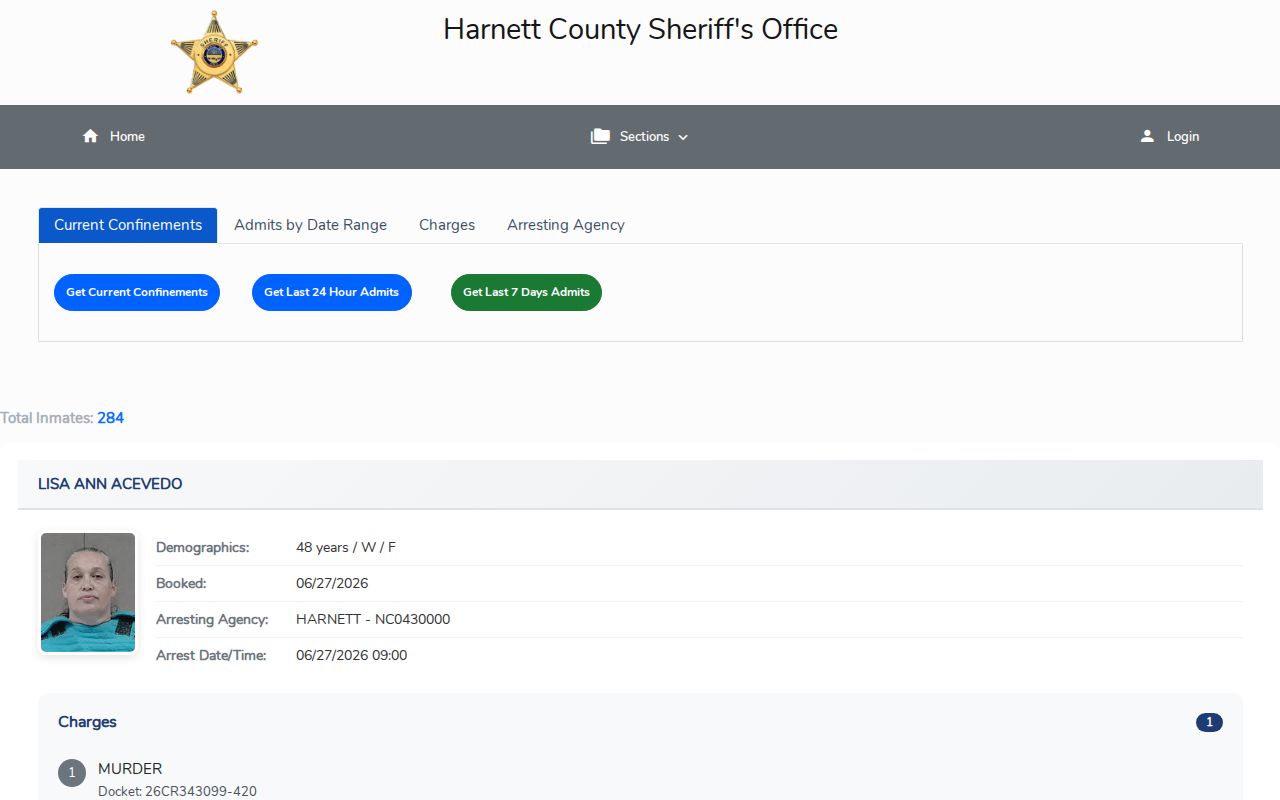
The Citizen Connect search form displays the date-range controls used for weekly arrest queries.
Fields Across Arrest-Log Sources
Fields differ across arrest-log sources. Citizen Connect and its related official reports carry the concepts listed here. Trust only what the live view shows.
| Record element | Meaning and limit |
|---|---|
| Name and admission date | Connects the person to a county detention admission during the chosen range; common names require another match. |
| Arresting agency | Can distinguish Sheriff and municipal pathways, but does not convert the jail record into a police incident report. |
| Charge or statute | An charge entered in the booking system, subject to later amendment or dismissal. |
| Bond and status | Dynamic release information at the time shown, not a sentence or finding of guilt. |
| Docket and court date | Starting points for court follow-up; the Clerk’s record controls disposition. |
| Photograph | The portal does not promise a universal public image. Detailed arrest reports may indicate that a photo was taken. |
Tie every result to its source and date range. A missing name does not mean no arrest happened. A release date tells you nothing about how a case ended.
Weekend Arrest Records Need Context
Weekends and holidays stretch arrest processing across calendar days. Magistrate review, release, and data entry all take time. So search a range that starts before your target dates and ends after them. Stay inside the 31-day cap. That approach gathers official admissions without assuming a posting schedule the Sheriff has never published.
Municipal arrests can land in the county detention system. Not every city police event leads to a booking. A Dunn, Angier, or Lillington incident report stays a city record either way. The county recent-arrests hub sorts out which office holds booking, incident, court, and photo records.
Official Reports Beyond Seven Days
Citizen Connect stops at 31 days per search. Older documents live elsewhere. The Sheriff's Felony Arrest Reports archive posts dated PDFs with year links for 2019 through 2023 and many 2024 dates. Mind the felony label, though. This is a document archive, not an all-offense booking roster. The official Felony Arrest Reports page shows how the dated reports and year links are arranged.
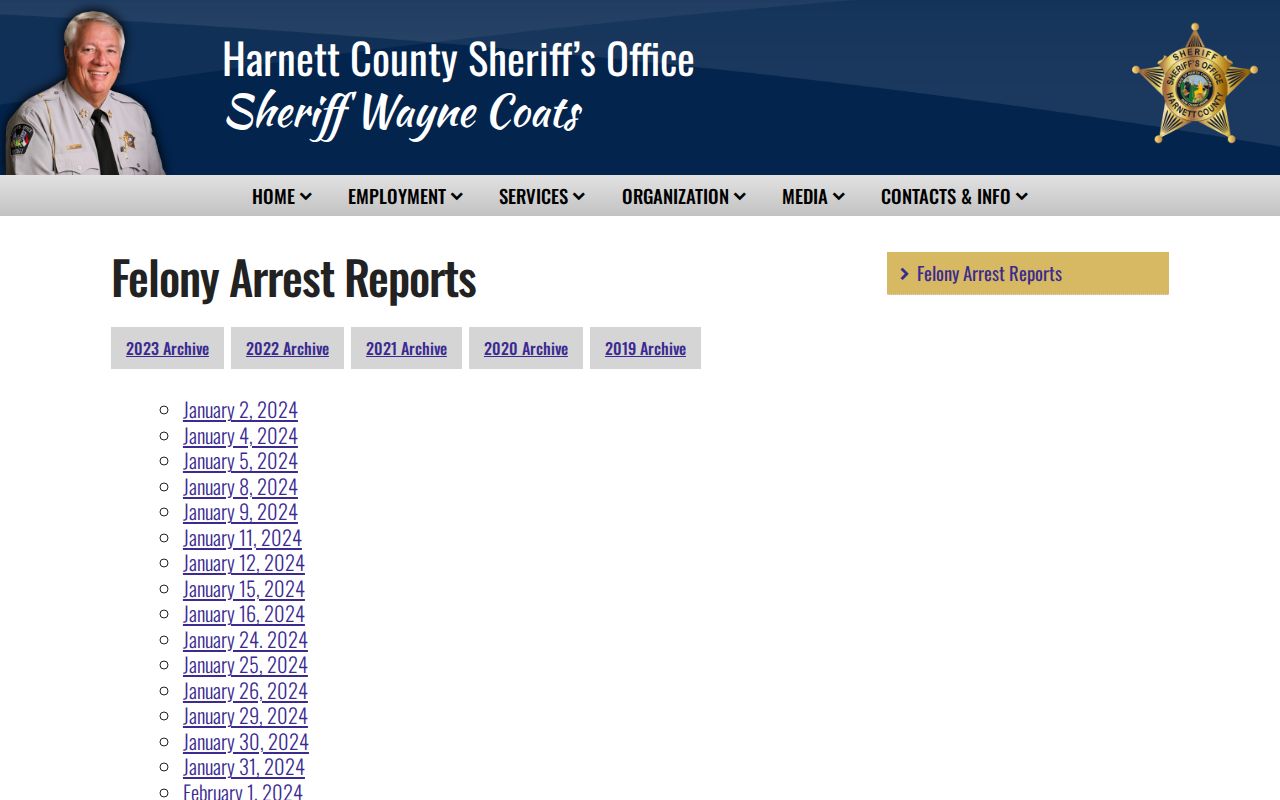
The archive suits a date-specific document hunt. It is not the current weekly roster.
North Carolina's Sheriff records schedule sets different retention periods by record type. Arrest-processing tracking records may be destroyed one year after the arrest. Standalone arrest reports carry five years. Reports inside felony or misdemeanor case files follow those case schedules instead. Nonmedical inmate-incarceration materials last three years after release or transfer. Inmate-list reports can go once superseded or obsolete. Legal holds can block destruction of any of them.
An online gap does not prove destruction. Ask the Sheriff what kind of item you want: arrest report, case file, criminal-history item, detention record, or superseded roster. For older material, the State Archives County Records Guide offers a separate route.
Give the custodian a bounded date range, the full name, the arresting agency if known, and any docket or report number. Ask which schedule applies. The Archives route does not mean Harnett booking photos have moved there. Current jail records still start with the Sheriff.
When Citizen Connect Blocks Access
The Southern Software portal sometimes shows an automated-traffic challenge. That screen says nothing about Harnett's data. The records are not missing, and the system is not offline. Open the direct portal in a normal browser or come back through the Sheriff's reports page. Never try to bypass the challenge.
Still stuck? Call the Detention Booking Desk at 910-893-0257 with the name and rough admission dates, or use the non-emergency line, 910-893-9111; a narrow request routes faster than a vague demand for a full arrest history.
Keep the error and the result separate. A blocked interface means the request never finished. It does not mean the person was absent from the records. Note the dates you tried, then try the Sheriff-linked route before calling.
News Blotters Are Selective Records
The Daily Record is the Dunn newspaper. It runs recurring Crime Reports drawn from the Sheriff and Detention Center. Those pieces can add dated context around Harnett County arrests. But editors pick which events to print. A story may compress the charges or run days after the booking itself. No newspaper item matches a complete live arrest log.
Commercial mugshot archives linger online far longer than any official Harnett County roster. Age alone adds no authority. Confirm facts through the Sheriff portal, a dated report, or the Clerk's record.
Arrest Logs Do Not Decide Cases
An arrest log shows detention admissions in Harnett County, the charges filed, and release details that shift over time. It settles nothing about a case's outcome. The Harnett County Clerk and the North Carolina Judicial Branch track the docket itself, so follow those records when a report ages or a charge changes.
Public Record Search
Sponsored Results